FGP Event · 5 August 2026
Pakistan Digital Democracy Dialogue 2026
"Digital Pakistan for All: Trust, Rights and Responsible Innovation"
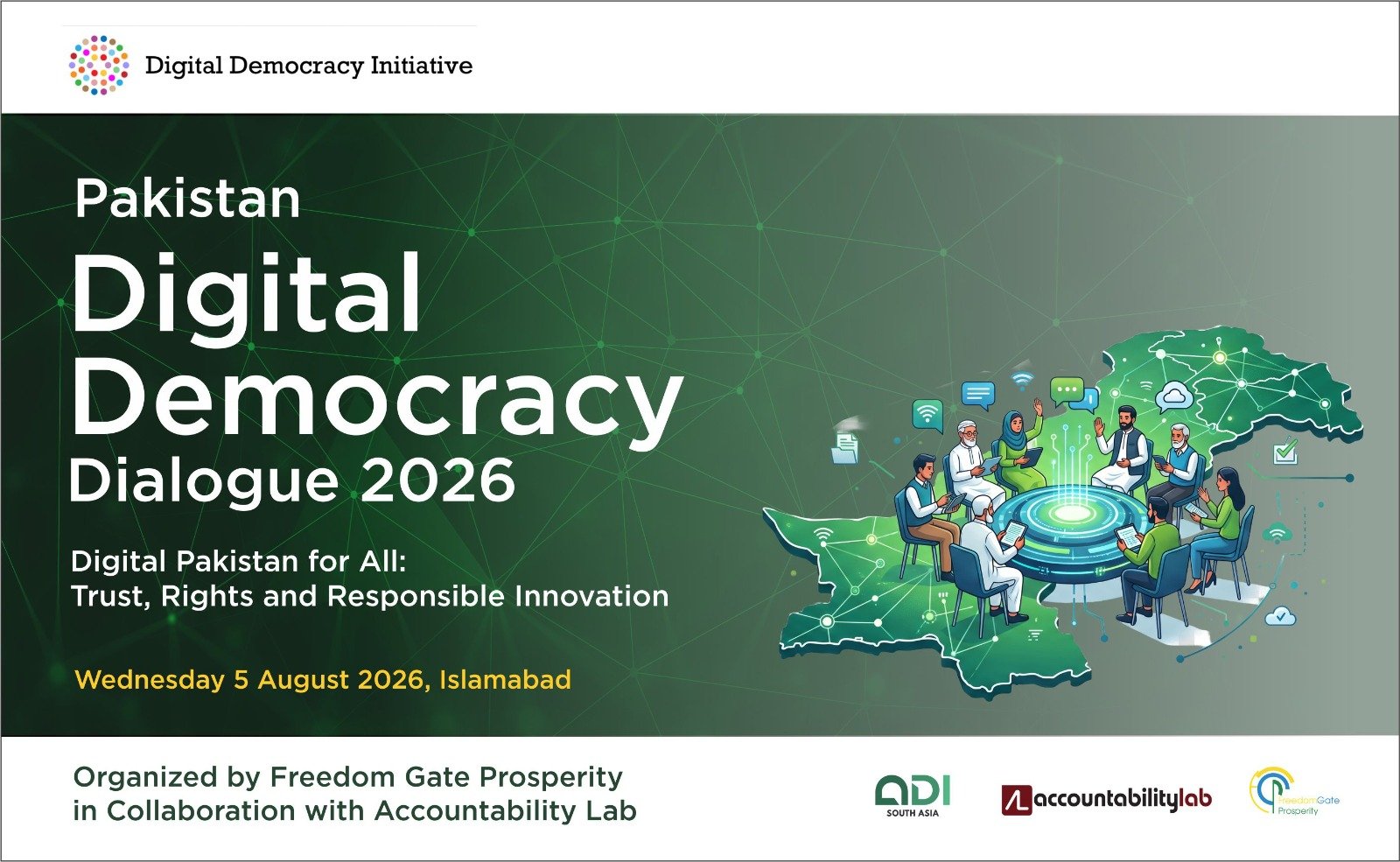
"Digital Pakistan for All: Trust, Rights and Responsible Innovation"
Pakistan's rapidly evolving digital landscape is creating significant opportunities for citizen participation, improved public services, economic development, innovation and more accountable governance. Digital technologies are changing how people communicate, access information, engage with public institutions and participate in democratic life.
At the same time, misinformation, online harm, unequal access to technology, threats to privacy and freedom of expression, weak public trust, and the insufficiently governed use of artificial intelligence and other emerging technologies present serious challenges. Addressing these concerns requires policies and digital systems that protect citizens' rights while supporting innovation and national development.
The Pakistan Digital Democracy Dialogue 2026 brings together policymakers, technology experts, journalists, researchers, civil-society representatives, development professionals and private-sector leaders to examine how Pakistan can build an inclusive, safe, innovative and rights-respecting digital future.
Under the theme "Digital Pakistan for All: Trust, Rights and Responsible Innovation," the Dialogue focuses on two closely connected areas.
Examining misinformation, responsible communication, media literacy, online freedom of expression, public trust, and the role of digital civic spaces in strengthening democratic participation and resilience.
Exploring inclusive access to digital technologies, responsible artificial intelligence, citizen-centred public services, data protection, and the potential of GovTech to improve transparency, accessibility and institutional accountability.
Guests register and share one word describing Pakistan's biggest digital challenge for a live word cloud.
Opening Remarks: Mr Ali Imran, Chairman, Board of Directors, Accountability Lab.
Welcome & overview: Mr Muhammad Anwar, Founder & CEO, Freedom Gate Prosperity.
Chief Guest: Ms Shaza Fatima Khawaja, Federal Minister for Information Technology and Telecommunication. Topic: "Digital Pakistan for All: Advancing Trust, Rights and Responsible Innovation."
Chair: Mr Murtaza Solangi, Spokesperson to the President of Pakistan.
Lead discussants: Brig Dr Muhammad Mukarram Khan (DG, Cyber Vigilance Division, PTA); Ms Farhat Javed Rabani (Correspondent, BBC Eye Investigations).
Refreshments, informal networking and selected short video reflections.
Chair: Dr Saad S Khan, Additional Secretary, Revenue Division, Ministry of Finance.
Lead discussants: Prof Dr Yasar Ayaz (Chairman, National Center of Artificial Intelligence); Ms Sidra Jalil (Founder, InspireMill & President, OPEN Islamabad); Mr Sharjeel Murtaza (Chief Digital Officer, Karandaaz Pakistan).
Presentation and endorsement of the policy action matrix, followed by a group photograph.
Informal discussion and partnership building over dinner.
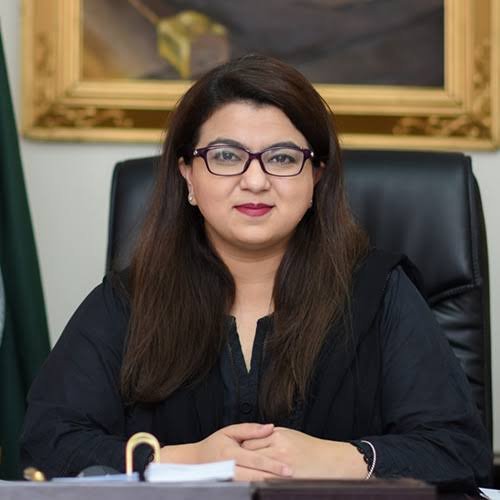
Pakistan's Federal Minister for IT & Telecommunication and a third-term Member of the National Assembly. A LUMS graduate with a master's from the University of Warwick, she leads the government's digitisation, e-governance and technology-growth agenda — including Digital Pakistan and Techdestination Pakistan — with a strong focus on digital inclusion, investment, innovation and technology-enabled public services.
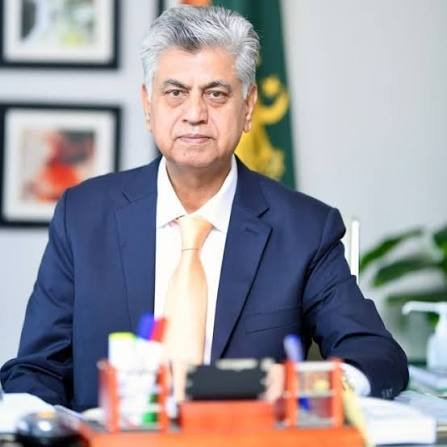
Spokesperson to the President and a senior journalist and broadcaster. He served as Caretaker Federal Minister for Information, Broadcasting & Parliamentary Affairs (2023–24) and led Pakistan Broadcasting Corporation as Director General (2008–13). The first Pakistani elected Vice President — and later Acting President — of the Asia-Pacific Broadcasting Union, he received the Sitara-e-Imtiaz in 2011.
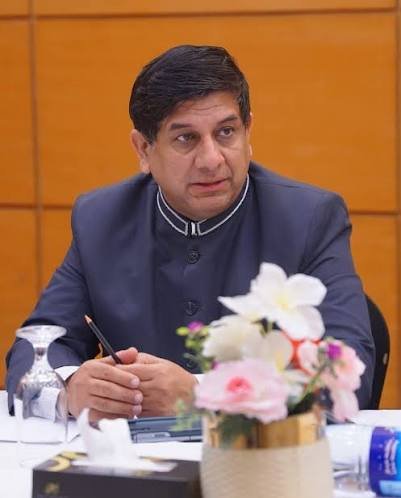
A career civil servant and diplomat with nearly three decades of public-sector experience, holding a PhD and postdoctoral qualification in International Relations and diplomacy. A historian, political scientist and author of eight books, his assignments have included UNESCO, UN-Habitat and the ECO Cultural Institute, alongside research on governance, public administration and reform of Pakistan's revenue-court system.
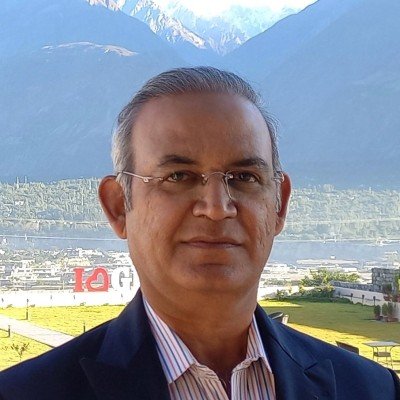
Director General of the Cyber Vigilance Division and Chief Information Security Officer at the PTA (CISSP, CISA). A NUST software engineer with advanced degrees in information security and supercomputing from Manchester, his work spans telecom cybersecurity, incident response, critical-infrastructure protection and national cyber resilience. He remains active in research on AI, blockchain and systems engineering.
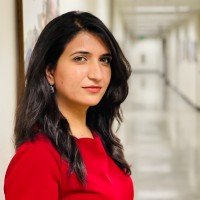
An award-winning correspondent with BBC Eye Investigations and BBC News, known for human-centred reporting on conflict, social change and under-reported communities. A Hubert H. Humphrey Fellow at Arizona State University's Cronkite School, her film "The Last Wakhi Shepherdesses" for BBC 100 Women won a 2024 Gracie Award. She has also received Pakistan's PurAzm Award.
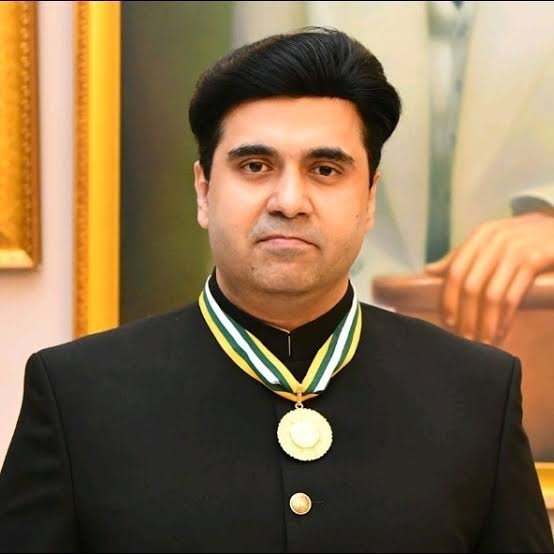
Founding Chairman and Central Project Director of Pakistan's National Center of Artificial Intelligence at NUST, and Professor of AI & Robotics. He earned his PhD from Tohoku University, Japan, and founded Pakistan's first Department of Robotics and AI in 2010. Author of 160+ publications, his honours include the President's Award for Pride of Performance and the IEEE Islamabad Lifetime Achievement Award.

Founder of InspireMill and President of OPEN Islamabad, with 15+ years in technology strategy, community building, research and entrepreneurship development. She has worked with Code for Pakistan and the Internet Society — designing boot camps, innovation challenges and hackathons. Her advocacy increasingly focuses on responsible AI, online safety and child protection, connecting founders, technologists, investors and policymakers.
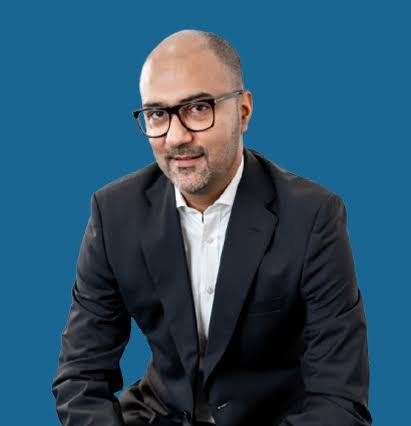
Chief Digital Officer at Karandaaz Pakistan and a Board Director of Parwaaz Financial Services. With 18+ years in automation, digital transformation and institutional reform, he leads initiatives advancing inclusive finance, digital payments and interoperable infrastructure. A strong advocate of digital public infrastructure, he focuses on turning technology investment into accessible, affordable and scalable financial services across Pakistan.
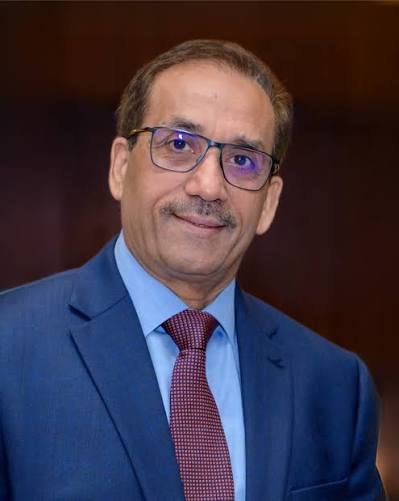
Founder and CEO of FGP with 33+ years at the Friedrich Naumann Foundation. Co-founder of The Learning School and a lifelong champion of civic education and democratic participation.
Chairman of Accountability Lab Pakistan and Country Director of UCLG ASPAC. A democratic-governance expert and constitutional lawyer with 20+ years in democracy, human rights and inclusive governance.

Board Director at FGP and a senior journalist, researcher and human-rights advocate working on governance, environmental justice, peacebuilding and journalists' safety.
A Pakistan-based, Section-42 non-profit advancing inclusive development, democratic participation and sustainable prosperity. FGP turns evidence-based ideas into practical initiatives across AI & digital transformation, climate resilience, education and governance — connecting government, civil society, academia, communities and the private sector with an emphasis on informed citizenship, stronger institutions and digital inclusion.
Our StoryA global translocal network making governance serve people. Founded in 2012, it supports active citizens, responsible leaders and accountable institutions through creative, locally grounded solutions — including Integrity Icon, Civic Action Teams and the Accountability Incubator. In South Asia, it serves as the Resourcing Mechanisms Host Partner for the Digital Democracy Initiative.
Visit SiteA regional programme strengthening civic space and digital democracy across all eight South Asian countries. It supports grassroots civil-society actors through inclusive funding, skills development and regional solidarity — with particular attention to youth, women and marginalised communities — promoting meaningful civic participation and safer, more equitable digital spaces.
Learn MoreThe Dialogue aims to generate practical recommendations, strengthen cooperation among stakeholders, and advance a shared vision of a digital Pakistan that is inclusive, trustworthy, innovative and democratic.