
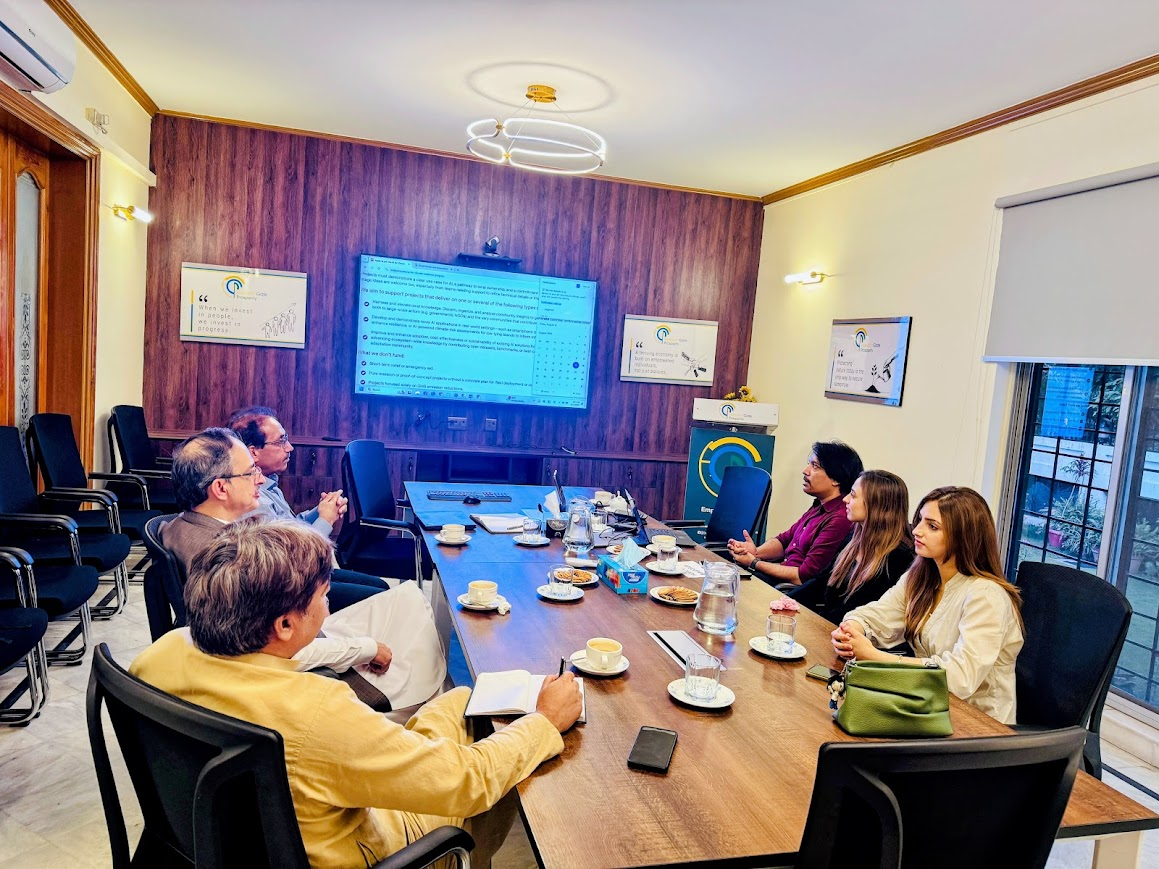
Freedom Gate Prosperity (FGP) convened a high-level working session with leading digital communications and technology experts to explore tech-driven solutions to strengthen climate resilience in underserved and climate-vulnerable regions of Pakistan. The engagement focused on translating advanced digital tools into practical, community-centered applications.
During the session, Asad Rafi, a digital communication specialist, and his team presented a range of AI-enabled concepts to support climate adaptation. These included predictive analytics for disaster preparedness, localized climate-risk mapping, and AI-powered advisory tools tailored for vulnerable populations.

Turning technology into a community asset
FGP CEO Muhammad Anwar reaffirmed the organization’s commitment to ensuring that climate knowledge, early warning systems, and resilience strategies reach those most at risk. “Our goal is to transform technology into a community asset, enabling people to anticipate, prepare for, and adapt to the impacts of a changing climate,” he said.
National perspective on responsible innovation
Offering a policy and governance perspective, Dr. Muhammad Rafiq, Member, Pakistan Climate Change Authority, emphasized that climate innovation must be evidence-driven and aligned with national adaptation priorities. He noted that tools such as risk mapping and early warning analytics can be powerful only when they are designed responsibly and connected with institutional coordination, data integrity, and clear accountability. He also stressed that technology should strengthen inclusion, ensuring that vulnerable communities benefit first, not last.

FGP’s climate desk priorities
Speaking on behalf of FGP’s climate team, Mr. Shafqat Aziz, Head of Climate Change Desk, highlighted that Pakistan’s climate response needs practical solutions that communities can actually use. He shared that FGP’s approach combines local knowledge with technology to deliver accessible climate information, strengthen preparedness, and support adaptation at the grassroots level. He added that future steps will focus on piloting community-friendly tools and creating locally relevant, multilingual, action-oriented awareness content.
From innovation to impact
The session also underlined the importance of community ownership, equity, and local relevance in all AI-driven adaptation efforts. Plans were discussed to ensure initiatives are co-designed with local stakeholders, promote inclusive participation, and are supported by strong governance and risk-mitigation measures to address technological, social, and environmental concerns.
By combining grassroots knowledge with advanced AI applications, scalable and replicable models can be developed to strengthen food security, enhance health